
ECS Technical Services
Ensure compliance with the Housing (Cladding Remediation) (Scotland) Act 2024
Intrusive surveys and their impact on building cladding assessment. This is a formal process, typically a Fire Risk Appraisal of External Walls (FRAEW), to evaluate the fire safety risk of a building’s exterior. This assessment is a legal requirement for certain multi-storey residential buildings in the UK and must be conducted by qualified professionals using specific methodologies like the BSI’s PAS 9980. These include Intrusive surveys, drone surveys, FRAEW reports and EWS1 surveys.
Purpose and Requirements
The primary purpose of a cladding assessment is to ensure life safety by identifying and mitigating the risk of fire spreading over or within the external wall system (EWS), a critical concern highlighted by the Grenfell Tower disaster.
A professional, qualified fire engineer or specialist conducts the assessment, which typically involves:
• Documentation Review: Gathering information like original building plans, fire strategy documents, and records of materials used in the external walls.
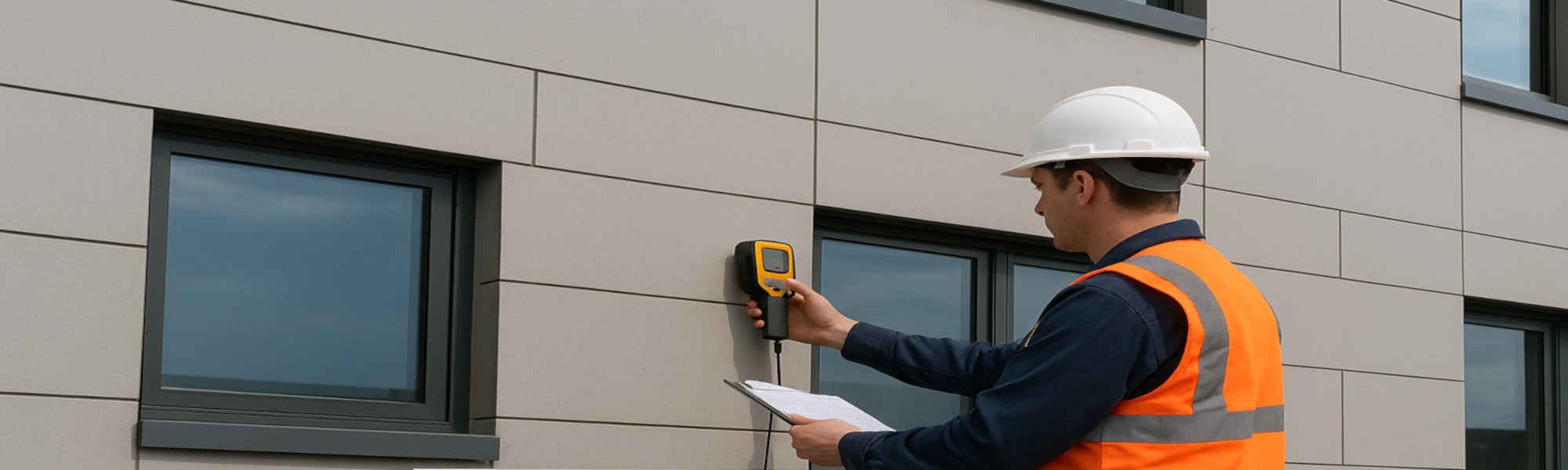
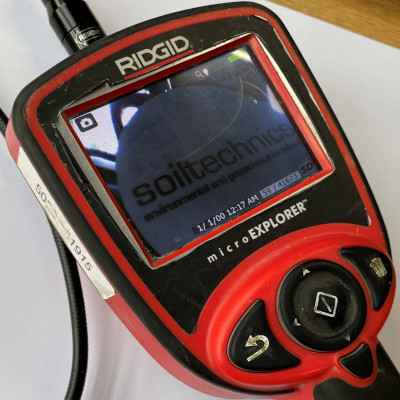
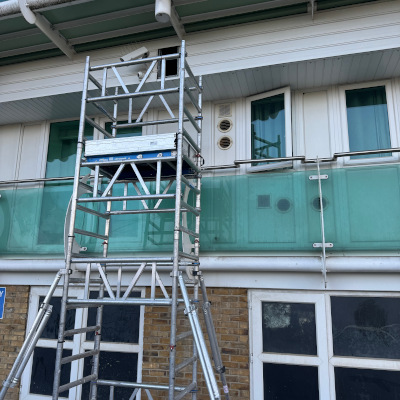
• Visual and Intrusive Inspection: A thorough visual inspection of the EWS, often requiring the removal of cladding panels (opening up) at various key locations (e.g., floor levels, window edges) to verify the actual “as-built” condition and check for proper installation of fire barriers.
• Material Analysis: Taking samples of cladding and insulation materials for independent laboratory testing to determine their combustibility (e.g., meeting A1 or A2 non-combustible classification).
• Risk Appraisal (PAS 9980): Using a standard methodology, such as the BSI’s PAS 9980, to identify risk factors, assess the potential for fire spread, and determine if remediation is necessary.
• Reporting: Producing a comprehensive report with findings, identifying any required remediation work, and potentially issuing an EWS1 form.
Outcomes and Next Steps
If the assessment identifies an unacceptable risk, remedial work (such as removing combustible cladding and installing fire-resistant materials or mitigating measures like sprinkler systems) will be required to make the building safe. Intrusive surveys are one methodology.
-
Funding: Government schemes, such as the Cladding Safety Scheme (CSS) in England and the Cladding Remediation Programme in Scotland, may be available to cover the cost of eligible remediation works, with an emphasis on ensuring that developers or building owners responsible for the defects cover the costs where possible.
-
Certification: Once remediation is complete, the building’s status can be updated on registers (like Scotland’s Cladding Assurance Register) to provide assurance to residents, buyers, and financial institutions.